I remember the night I almost ruined my entire dinner plan. The pot of lentils had been simmering for hours, the onions had browned to a deep caramel, and I was staring at a stubborn pot of sauce that refused to thicken. My friends called it “the one that never stops simmering,” and I was about to throw in the towel. But then I realized that the secret wasn’t in the timing; it was in the layers of flavor that would soon come together like a well‑orchestrated symphony.
Picture this: a pot of lentils bubbling with earthy sweetness, onions releasing a fragrant perfume that mingles with the sharp bite of garlic, and carrots adding a splash of orange that brightens the whole dish. The kitchen is a canvas of sizzling sounds—oil crackling, vegetables popping, the gentle hiss of broth as it reduces. The aroma is a comforting hug, the anticipation building as the sauce thickens into a velvety coat that promises to embrace every bite.
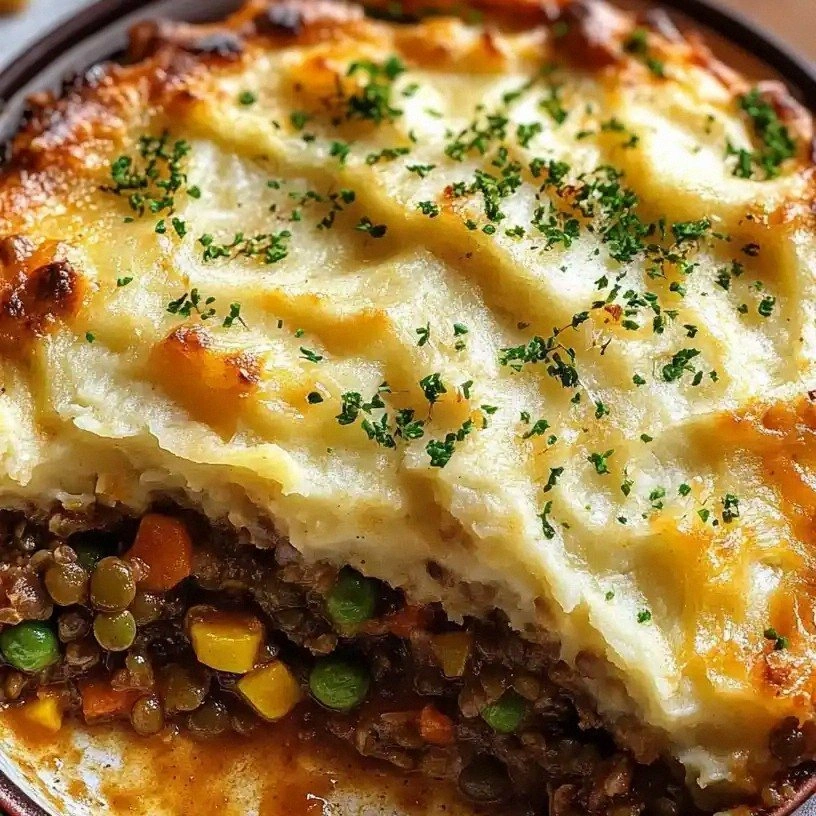
What makes this version stand out is that it takes the humble shepherd’s pie and turns it into a vegan masterpiece that doesn’t compromise on depth. The lentils provide a protein punch that rivals meat, while the mash topping delivers that buttery, golden crunch that makes every forkful feel like a hug. I dare you to taste this and not go back for seconds because once you experience that melt‑in‑your‑mouth texture, you’ll never settle for anything less.
And here’s the twist that most recipes overlook: a subtle pinch of nutmeg in the mash that adds a warm, almost cinnamon‑like undertone, and a splash of soy sauce in the sauce that deepens the umami without overpowering the natural flavors. This isn’t just a dish; it’s a statement that plant‑based meals can be both hearty and sophisticated. Let me walk you through every single step — by the end, you’ll wonder how you ever made it any other way.
What Makes This Version Stand Out
- Flavor Depth: The combination of tomato paste, soy sauce, and dried herbs creates a complex, savory profile that mimics the richness of a traditional shepherd’s pie.
- Texture Contrast: The creamy mash top meets the tender lentil base, providing a satisfying bite that keeps the palate engaged from first spoon to last crumb.
- Ingredient Quality: Using fresh carrots, celery, and a single bay leaf elevates the dish, ensuring each component contributes a distinct, aromatic note.
- Simplicity: Despite its depth, the recipe requires only a handful of pantry staples, making it a go‑to for busy weeknights.
- Make‑Ahead Friendly: The pie can be assembled and refrigerated, then baked right before serving, saving you time without compromising flavor.
- Plant‑Based Power: The lentils deliver a protein punch that satisfies even the most discerning carnivore‑in‑training.
Alright, let's break down exactly what goes into this masterpiece…
Inside the Ingredient List
The Flavor Base
The lentils are the heart of this dish, offering a meaty texture and a subtle earthiness that grounds every bite. They absorb the tomato paste and soy sauce, turning a simple stew into a complex sauce that coats the vegetables like velvet. Skipping lentils would strip the pie of its protein content and depth, leaving a thin, underwhelming base.
The Texture Crew
Carrots and celery bring crunch and a natural sweetness that balances the savory sauce. The carrots’ orange hue adds visual appeal, while the celery’s subtle bitterness cuts through the richness. If you’re vegan and prefer a completely grain‑free version, replace the lentils with a hearty quinoa blend.
The Unexpected Star
Frozen peas are the surprise element that introduces a pop of green and a burst of sweet freshness. They also help thicken the sauce slightly, giving it a silky mouthfeel. A quick swap for chopped fresh spinach would add a nutrient boost and a deep green contrast.
The Final Flourish
The mashed potatoes, enriched with plant‑based butter and unsweetened milk, create a golden crown that melts into a buttery sauce when baked. The pinch of nutmeg adds a warm, almost cinnamon‑like undertone that elevates the whole dish. If you’re looking for a lower‑carb option, try a cauliflower mash instead.
Everything's prepped? Good. Let's get into the real action…
The Method — Step by Step
- Heat the olive oil in a large skillet over medium heat. Add the diced onion, carrots, and celery, cooking until they soften and the onions become translucent—about 8 minutes. Stir in the minced garlic and let it bloom for 30 seconds; that aroma is the first hint of the dish’s depth. This is the moment of truth: the vegetables must caramelize just enough to bring out their natural sugars.
- Pour in the tomato paste and stir until it’s evenly distributed, letting it cook for 2 minutes to reduce its acidity. Add the soy sauce, dried thyme, rosemary, and bay leaf, then pour in the vegetable broth. Bring the mixture to a gentle simmer, allowing the flavors to meld for 10 minutes. Watch the edges pull away from the pan—this is the sauce thickening into a luscious base.
- Add the lentils and frozen peas, stirring to combine. Reduce the heat to low and let the stew simmer uncovered for 15 minutes, or until the lentils are tender and the sauce has thickened. Taste and season with salt and pepper—remember, this is a flavor foundation, so adjust carefully. This step ensures every spoonful is packed with umami.
- While the stew simmers, peel the potatoes and cut them into chunks. Boil them in salted water until fork‑tender, about 15 minutes. Drain and mash with plant‑based butter and unsweetened milk until smooth. Season with salt, pepper, and a pinch of nutmeg. The mash should be creamy yet hold its shape when spooned on top.
- Preheat the oven to 375°F (190°C). Transfer the lentil mixture into a baking dish, smoothing the surface with a spatula. Spread the mashed potatoes evenly over the top, using the back of a spoon to create a rustic, uneven finish that browns beautifully.
- Bake for 25 minutes, or until the top is golden and the edges bubble. If you want an extra crisp crust, broil for an additional 2–3 minutes—watch closely so it doesn’t burn. The final look should resemble a golden crown atop a savory base.
- Remove from the oven and let it rest for 5 minutes. This resting period allows the flavors to settle and the top to firm up for easier slicing. Serve hot, and watch the steam rise like a comforting cloud.
- Optional: garnish with fresh parsley or a drizzle of vegan gravy for an extra touch of elegance. Plate each portion with a side of crisp salad or steamed greens to balance the richness. The dish is now ready to impress.
That’s it — you did it. But hold on, I've got a few more tricks that'll take this to another level…
Insider Tricks for Flawless Results
The Temperature Rule Nobody Follows
Many chefs bake at 400°F, but lowering the temperature to 375°F ensures the mash browns evenly without burning, giving a golden crust that’s both crisp and tender. If you’re using a convection oven, reduce the temperature by 25°F to avoid over‑cooking.
Why Your Nose Knows Best
During the simmer, pause and inhale deeply. The scent of caramelized onions and tomato paste should hit your nose like a warm hug. If the aroma feels flat, give it another minute—sometimes a few extra minutes make all the difference.
The 5‑Minute Rest That Changes Everything
Letting the pie sit after baking allows the sauce to thicken and the flavors to meld. A friend once skipped this step and served a pie that felt raw; the rest time gave it the silky finish we’re celebrating today.
The Perfect Mash Consistency
Add the plant‑based butter gradually; if the mash feels too thick, a splash of unsweetened milk will loosen it without diluting flavor. The goal is a mash that’s creamy yet holds its shape when spooned.
The Quick‑Simmer Shortcut
If you’re pressed for time, pressure‑cook the lentils for 8 minutes instead of simmering. This keeps the texture firm and saves a chunk of time without compromising taste.
The Final Touch of Herb
A sprinkle of fresh rosemary just before serving adds a fragrant, aromatic finish that elevates the dish from good to unforgettable.
Creative Twists and Variations
Spicy Southwest Edition
Swap the dried thyme for cumin and add a splash of chipotle sauce to the base. Use corn kernels instead of peas for a pop of sweetness. This version is a hit with fans of bold, smoky flavors.
Mediterranean Delight
Replace the tomato paste with roasted red pepper puree and add chopped kalamata olives. Finish with a drizzle of extra‑virgin olive oil and a sprinkle of oregano. The result is a bright, herbaceous dish that feels like a sunny Mediterranean picnic.
Mushroom Umami Boost
Sauté sliced shiitake mushrooms with the vegetables for an earthy depth. Add a splash of miso paste to the sauce for a fermented umami punch. This variation is perfect for mushroom lovers seeking a richer texture.
Cheesy Vegan Twist
Stir in a handful of nutritional yeast into the mash before baking for a cheesy, nutty flavor. Sprinkle vegan cheese on top during the last 5 minutes of baking for a golden, melty crust. This option turns the dish into a comforting comfort food.
Low‑Carb Version
Swap the mashed potatoes for mashed cauliflower, enriched with plant‑based butter and a dash of garlic powder. The resulting pie is lighter in carbs but still delivers a creamy, satisfying mouthfeel.
Breakfast‑Style Shepherd’s Pie
Add sautéed spinach and a handful of chopped scallions to the base, and top with a sprinkle of vegan cheddar. Serve with a side of toasted sourdough for a hearty, protein‑rich breakfast that will keep you full until dinner.
Storing and Bringing It Back to Life
Fridge Storage
Cool the pie completely before refrigerating. Store in an airtight container for up to 3 days. When reheating, cover with foil and bake at 350°F for 15 minutes, or until heated through.
Freezer Friendly
Wrap the assembled pie tightly in plastic wrap, then place in a freezer bag. Freeze for up to 2 months. Thaw overnight in the refrigerator before reheating as described above.
Best Reheating Method
Add a splash of vegetable broth or water before reheating; this steams the top back to a crisp, golden finish. Reheat in the oven rather than the microwave to preserve the texture of the mash.